Categories
Life With God Uncategorized

Heaven and Hell

Reading Time: 2 minutes

Heaven_and_Hell_by_RedXen


If a man is united with God how could he not live forever? If a man is separated from God, how could he not wither and die? —C. S. Lewis

No argument that is founded on logic can answer those questions. Our relationship with God is our eternity.

Heaven, simply put, is a oneness with God. There is no doubting yourself, there is no questioning him. Everything is set so you can be the person you were meant to be. You also get a relationship with the maker of the universe, so, there’s that, too.

Hell is the opposite. Hell is life with no God. For real. You aren’t pretending there’s no God, God just is not there. It is chaos, it is disorder, it is pain, it is suffering. It’s everything we were not meant to be. All with no hope.

Heaven isn’t a place we earn. Heaven is a place we “inherit” because of a relationship with God. It follows our bond with him. It is the natural course. If you love him, you are bound through eternity to the one who created eternity and you. We don’t inherit it by friending God as if he were on facebook, keeping him in your contacts in case you need him. You need a real relationship founded on trust, and love. It’s not required by rule, but by law. The law of this world. If you’re not united with God, what is keeping you from withering and dying?

Hell is not a place that God sends us. It is a place we send ourselves. When God created us, he gave us the freedom of choice, because otherwise it wouldn’t be an honest relationship if he created us to naturally love him.

Neither Heaven, nor Hell, can be used as a coercive bludgeon in an honest relationship. God doesn’t hold anything over our heads, he simply presents information and allows us to make an informed decision.

We play games with ourselves, though. Our fears of hell drive us to falsify a relationship with God, and our desire for Heaven, without a loving relationship with God, does the same.

Leave it to us to screw up the relationship, right?

Thank God for Jesus, because he’s so much wider than our narrow-mindedness. He’s so much longer than our short-sighted views. So much taller than our shortcomings.

He’s so much more than our less.

Categories
Life With God

Chaos is in the Eye of the Beholder

Reading Time: 3 minutes

I realized something: I’m sorta afraid of death.

It made me wonder why. Death is the doorway to heaven. It’s the end of pain, and hardships, the end of imperfections. For those who know they need God (and earnestly seek him) it’s a one-way ticket to eternal happiness.

On the other side of the coin, it’s the end. It’s the dark sucking hole that is impossibly empty. For those who don’t believe, it’s just the end of existence. That doesn’t seem so very bad. You do what you can while you’re here, and when you die, you don’t care, you’re dead.

(Plus there’s Hell, that’s scary, but that’s another article.)

But I realized why it’s scary to us people. Here’s what I think:

I’ve been reading about people and God, more specifically the intimate relationships between individual people and God. In his book The Normal Christian Life, Watchman Nee talks about how living for God is absolute. You don’t act upon your own ambitions any more. You either do, or you don’t.

In a world where your career, or what you’re going to do when you grow up, or how you’re going to support yourself (let alone a family!), are questions weighing down most jobless people, it’s very hard for us to trust in God. Especially because God’s rewards aren’t often physical rewards. His rewards come in spiritual formatting, more regularly. And that software doesn’t compute with our hardware: the physical.

All that to say, people have a hard time surrendering themselves to God, more so when they’re pressured by whatever problem is directly in front of them. They can be forced into having tunnel vision, where they can’t see God and the spiritual aspects of life, because what’s happening in front of their physical being is seemingly more pressing.

When this happens, it becomes even more difficult to let go.

Imagine you’re holding your infant child, and you are going to hand it to your most-trusted friend. You can judge the distance with your eyes. With your arms and hands you can feel their arms wrapping around your child. You reach out slowly, transferring the child into your most-trusted friend’s arms. Piece of cake.

Now imagine your most-trusted friend is invisible. Not only that, you can’t feel him. You cannot sense him. Would you trust yourself to hand over that newborn baby?

I know I wouldn’t. Because, when I let go, I can’t control what happens.

Control is something that we people think we can have. We can’t. Even if you don’t believe in God, you know that each individual has their own choices. They’re all going to choose something. You may be able coordinate large groups of people, maybe even whole countries, but you’ll never be able to control each individual.

When planning a summer BBQ, Sharon can’t make sure Lisa brings the potato salad, that’s up to Lisa, to put in the car and drive the car to Sharon’s. And that’s not to say that it’s up to Lisa entirely, her husband Frank may decide he doesn’t want to share the deliciousness his wife made, or their dog Dennis may not be able to resist the aroma. As you can (hopefully) see, control is impossible. But we like to think it’s not.

This element of chaos, the fact that we don’t have any control, is obvious in trusting God, because he may lead you one way, and then slam the door in your face, in order for you to find the other doorway. His methods aren’t chaotic, they just appear that way to those who are only capable of seeing one side of the story.

For me, personally, it is very hard to trust God. Whether he is asking me to respect my siblings or my parents, or he’s showing me something I’m not sure I want to happen, or even trusting him in the things I do want to happen, that he allows to happen. All these things are difficult, because if they’re out of my hands, I am not sure I’ll get the result that I want.

His will, not ours. That is the hardest part, I believe. What he wants, not what I want.

I think that when you allow the Holy Spirit to be with your spirit, you can be in concordance with God. It is then, and only then. We all act outside of the Spirit, it’s nearly impossible not to, but if we could get to the point where we trust God enough to do all that he says, then we’ll be at a point where the consequences are always for the best, regardless of the immediate affect.

When we can trust God that deeply, death isn’t something to worry about. It’s not something to even think about, because we can’t control it (or anything), and we trust God to know that when he chooses to take us will be for the best.

It’s easy for our spirit to reach this level of trust, but difficult for our soul, our body, to reach this level. And that comes back to my point about the physical being more obvious to us, thus hindering our perception of, and willingness to trust, God.

I don’t think I’m scared anymore. Now, I’m anxious to reach that level of intimacy.

Categories
Uncategorized

Body of Christ

Reading Time: 4 minutes

I’d like to pose this metaphorical comparison to you.

In our world society is seen on many levels. America is built (was built) on a societal format like this: 1. God 2. Family 3. Town, city, state, federal government. You see society (defined roughly as organized interaction/living with other people) on every level. From the family (Parents to siblings, siblings to siblings, spouse to spouse) to the entire world (nation to nation), there is a society for people.

But, society isn’t just skin deep.body

When you look at the human body, you can see a Society of Organs, the Board of Muscles, and the Imperial Nervous System all working together from the main organ to the products of the organs. Bones and Co. (llc) are responsible for supporting the muscles. That’s the same as Coca-Cola being dependent on a plastic company for bottles. It’s a society. Without Blood Management Inc. the whole body would die. Just like the lack of water management would kill people in “real” society.

There’s more, though. On a smaller level, there are cells. Cells can vary but they are all living things that make up our human body. (Wow, big picture for a little cell.stem_cells

But even this society is made up of smaller society. Look closer at the cells. They’re always described as small cities and the like. With each piece doing it’s part at an impossibly small scale.

But even this society is made up of even smaller society. What makes up those cells? Individual atoms that merge their businesses to form new opportunities (e.g hydrogen to helium).Atom-1

But I didn’t come here to tell you that.best_space_hd_wallpaper

You, no doubt, have heard of constellations; incredible designs made up of stars. I do not personally know how evolutionists disprove that show of organization, but  to me, they’re… okay, I’ve got nothing I just wanted a segway to space. (Note to self: Make flying Segway)

In space you see an incredible amount of precision. It’s nearly perfect. There’s still decay and whatnot, but everything stays the same. Scientists know that the Earth will be Y in X amount of Hrs. and ~ #^&% + )(+ ** = 🙂 because they know the pattern.

Pattern? Society has patterns, doesn’t it? Yes, and in space, it’s the most primitive form of society. Traffic-like society. You’ve got an asteroid in the southbound lane, should he take Transit? No that’ll take him downtown… but in reality, as a inanimate object, he’s got no say in the matter. Gravity, or God (That sounds like an article in the making), keeps the asteroid in it’s path. The planets orbit, and gyrate. The galaxies be galactic. It’s all guns and roses. Um, Sunshine and… whatever people say.

Fact is, society is absolutely everywhere. The pixels on your screen. The words that I’m writing. Think about it. The pixels work together to form a picture, while the words form sentences. Which turn into paragraphs, and then finally an article, a book, a lot of words.

Back to the Bodily Society, what does God say about Christians? We’re the body of Christ. So with all of this society in mind, think back to the atoms. They make up stuff. They are things. Remember that they have mini societies with electrons and protons that orbit and such, just like, on a much, much larger scale planets orbit around stars, and stars orbit the center of their galaxy, and… I don’t know what galaxies do. Google says they gather in clusters. So, galaxies huddle.

So, in light of the society, and the body. What if (best two-word combination ever!) the universe is God.

Boom. Mushroom cloud in brain. Mind blowing. Mind blown.

Now, before you start to say, “Well, wait a minute… what about all of the sin, and the imperfection, and the death, why’s that happening if the universe is God?” let me say, “I’m not stating a fact, just a theory,” and, “Let me explain.”

When Jesus was put on the cross, he was a martyr for all of our sins. He took away God’s wrath in order to save our sorry hides. In the beginning, the universe was broken, when sin came into play. Just like Jesus was broken to pay for our sins.

Also, the bible is very interpretable leaving so much to the imagination, but there are times when it states simply what is true. Could be that it was stating a fact. Why waste time with metaphors when something is actually factual but it sounds like a metaphor.

Not only that, I’ve always thought that God was a whole lot more real that we give him credit for. He doesn’t have to be physical (and he’s not really) but he can interact with us on a physical level I’m sure (he is, ahem, God after all).

I can’t think of any specific reasons why it couldn’t be true, except the imperfection. Even if this isn’t true, it’s fun to see all of the similarities in the world, and universe we live in.

(Now I must solve the conundrum posed by the lyrics “He holds the whole wide world in his hand”. Does “world” refer to earth? Is the “whole wide world” the Milky Way? Does God even have hands?)

Categories
Uncategorized

DayafterEasterSunday Monday

Reading Time: < 1 minute

Now, DayafterEasterSunday Monday is not Internationally recognized for a reason. Nothing exceptional happened that day. At least by biblical standards, and that’s kinda what they’d be going on if they were to judge it’s worth as holiday.

So it’s not special. But that’s what today is, so that’s what this post is called.

In truth the poem I am presenting today happened much later than the day after but I figured a poetic pause was in order, so I paused.

Now you may hear my poem about the moments after Jesus rose into heaven.

(Angels of the Lord)

Don’t assume sadness
Even though He’s gone, he lives
All the angels sing
The reunion’s glorious
Heaven’s never seen such joy


Love is patient, right?
Immanuel is risen!
Finally you’re free
Eternally saved from sin


Revel in relief
Exclaim your joy; let them know
Till He comes for you
Until He gathers you all
Remain faithful, please
Never will he fail his children

Categories
Uncategorized

DeathFul Friday

Reading Time: 2 minutes

Good Friday is the day Jesus died.

And you say this is a religious holiday? Sounds rather secular to me…

Fatal Friday, maybe? DeathFul Friday, perhaps? Forgettable Friday? I get that the man died for out sins, but there’s a reason we hold solemn, candlelit gatherings for his death.

It’s because he died.

Christians like to flaunt Jesus on the cross (crucifixes and such), but, um, OUCH! I feel that Jesus’ death shouldn’t be mourned, because he—ahem—spoiler alert—ahem—is still alive.

Instead his death should be mourned as the consequence of our sins. We killed an innocent man. In reality he died for us, of his own choosing, but to save us from our punishment. If you have trouble accepting gifts, try to wrap your head around this gift.

Amazing, huh?

In light of deathFul Friday, the day that Jesus was killed, for/because-of your sins, I’ve compiled a few AcrosTankanic (boy, I’m just making up words left and right to-yestermorrow) poems. Acrostic poems have verses with first letters that spell words (Acronym, Acrostic). For example.

Happily smiling
In your direction

Hi. Now, Tankas are similar to Haikus. But in stead of three lines with 5-7-5 syllables, Tankas have five lines with 5-7-5-7-7 syllables.

Now, in all truthfulosity (there I go again), I did stretch the boundaries a few times, but they should be close, or fit the poem regardless of syllabic content.

Without further ado, deathFul Friday Poems:

(Pharisees)

Devils in the night:
“Everyone believes in him!”
“A push starts a fight,
“Then down comes the Romans’ wrath!”
“He will bring death to Israel!”

Dastardly words said
Evil plans set in motion
Apostle Traitor
Thirty pieces of silver
How many lives will be saved!

(Judas)

Do not hurt him, please
Even if he deserves it
“A kiss to signal”
To think he had the power
He wasted it on beggars

Deceiver greats him
Eternal implications
A kiss of death laid
Trouble ensues; sword; slash; clash
Healing in the midst of doom

(Jesus)

“Do you come with swords,
“Even though I’m not a thief?
“Are you frightened?”
There’s no other way, Lord God?
“Heaven’s plan stands all alone”

Darkness fallen now
Everyone weeping wildly
Anon they’ll gather
They will watch as he is killed
His cries of pain will ring out

Death drawing nearer
“Eloi Eloi lama sabachthani!”
Aching, throbbing pain
The air’s escaping his grasp
Heaven’s tears fall; has Death won?

Love’s strength roars out
It searches for the divide
God and man, now one
Hanging there in the temple
Torn in two, the curtain’s dead

(Judas)

Did I really do it?
Earth’s only innocent man; dead
A murderer now
There’s only one thing to do
Hanging is a just penalty

Categories
Uncategorized

Life and Death

Reading Time: < 1 minute

Life and Death are inseparable.

Life is the beginning of struggles to find truth, to live truth. Life is a constant battle between our hearts and our greedy flesh. Life is also the time when we get to experience God’s love.

Death is the end of struggles to find truth, and the end of our constant battle with our flesh. It’s also a beginning. It’s doorway to the choice to live with God, in his unshackled glory, or to live without God, supposedly unshackled to be as we may.

On Earth, Life is judged with certainty. “Life is good,” they say. They say it because Life seems like something we can control. Reality tells us different.

On Earth, Death is judged a certainty. It’s the end from this vantage point, and it’s a sad, evil thing. It’s scary because we know we can’t control it.

From the Other Side, Life is a hardship to be borne. It’s cold, hard, and uncomfortable. It’s scary because we can’t control it.

From the Other Side, Death is a new beginning. There’s a decision which we can control, either on Earth, or on the Other Side. To live with God, or without. Without struggle, or with. With peace, or with pain, without strife, or without calm.

Life is Good.

Life is Hard.

Death is Hard.

Death is Good.

Categories
Reports

William Wilberforce, Wow!

Reading Time: 4 minutes

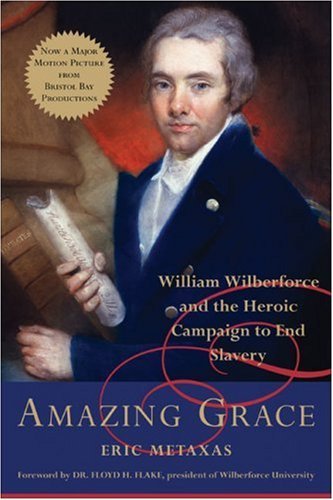
51a-TSyuh9L

A miracle, according to the New Oxford English Dictionary, is a surprising and welcome event that is not explicable by natural or scientific laws and is therefore considered to be the work of a divine agency.

With that definition, I’d have to say that William Wilberforce’s life was jam-packed with miracles. Left and right you can see divine influence, without too much assumption. The story of a man who had the guts to stand against all of the nastiest people in the country–in the world, really–wasn’t one of glamor, or glory. No, the hardships were extreme, and the consequences dear, but the results are still in effect.

In an attempt to tell of two main miracles in William Wilberforce’s life, I’d have to start at the beginning. He was born into a moderately well-off family, and didn’t want for food or shelter. That leads to the first miracle: Wilberforce was very spoiled, because of his “societal class,” and he grew into a charming party animal. Friends with all, and well-practiced in the art of public speaking, he was geared for success in a life of politics.

As he grew beyond childhood (making beyond ten being a miracle at that time in England) he was sent to his aunt and uncle’s home. They continued his upbringing, and he was converted, during his time with them, to a radical Methodist. At the time that was considered to be, well, radical. The “Methodists,” or “enthusiasts” as they were derisively dubbed, were scorned for their enthusiasm towards evangelical activities. They were considered uncouth by the elite of the culture and society. [Look up George Whitfield] This is miracle number two: Wilberforce, until this point, had lived rather frivolously, due to his significant monetary benefits. He was able to do anything he wanted, and he wanted to have a good time. He was smart but lacked direction. In this section of life God gave him direction. This helped Wilberforce realize the incredibly evil contrast between his life, and the lives of the slaves.

Further into his life, Wilberforce has gained a reputation. He is a witty, charming, and kind politician fighting for the rights of all men, because all are equal. He’s proposed and passed bills to stop public burning, and has reduced the laws punishable by public hanging by nearly half and half again! He’s becoming quite accomplished, but he knows his work is nowhere near finished. Slavery is still rampant at this time.

To properly frame the situation I have to explain a bit. When I say slavery, or racial injustice, you think of the Civil War maybe? The whites in the South? The Triple K? Or the Brown v. Board of Education case?

Take all of those horrendous things and defenestrate them. Now think of the very worst racial injustice you’ve heard of and double, if not triple it. The process is disgusting.

These slaves were stolen from their homeland of Africa and forced to lay horizontally stacked, one upon the other, until you couldn’t fit anymore because of the ceiling. Then, if they weren’t dead at the end of the trip, because of indescribable horrors, then they were taken to fields in America, or in any other colony that the British could use them at, to work until they broke, or died. It was a lucrative trade that many were loath to part with, but at it’s core it was evil, and many sensed that.

Wilberforce fought for years upon years, and slowly chipped away at the massive institutionally accepted evil, and eventually gained some credence. Many of his friends laid their professional lives on the line for his cause, and helped him fight the slave trade. Eventually, after endless trials and underhanded schemes being thrown at them by large corporations (such as the British East India Company, which essentially governed India) Wilberforce prevailed, derailing what at the time was probably the most integral trade in the British Empire.

To correlate everything, I’d like to point out that Wilberforce never would have been so empathetic with the slaves if he hadn’t become a radical Methodist when his mother sent him to his aunt’s. That event alone was life-changing, and -shaping. He was changed from the well-educated, charming ne’er-do-anything-of-import that he was, to a deep thinking and pious man.

He also wouldn’t have been so self-condemning, if he hadn’t had his previous life as a well-to-do British elite.

The implications are astounding, aren’t they? Let’s go step by step, taking a few liberties.

God places Wilberforce into a rich family, Wilberforce grows; he learns academically–earning degrees necessary for a career in parliament–and personally–he develops his personality: wit, charm, and eloquence. Then, Wilberforce throws everything for a loop. He doesn’t have any ambition. Everyone likes him, and he just wants to enjoy life. God says, “No, you’ve got bigger things to do,” and sends him on his way to his Aunt’s by manipulating extenuating circumstances. Wilberforce becomes a Methodist, this leads to the cure of the world’s most deadly disease: slavery.

It’s amazing to see that through one man, God changed the world, taking in stride Wilberforce’s own decisions, and using them for the benefit of the world.

That shows me, more than anything else, God will forgive any sin. Not only that, but he’ll use that sin to the benefit of you, your family, the world?

The possibilities are endless. Luke 1:37, Luke 18:27.

For anyone looking to read more on William Wilberforce, the book that I read is Amazing Grace by Eric Metaxas (above). It was comprehensive, as far as I could tell, and well written. And if you don’t want to read a scholarly work such as that, then Wikipedia is open 24/7 🙂

Categories
Life With God

God.

Reading Time: 3 minutes

Picture 1God.

The word itself causes conniptions in many circles. Descriptions vary. Relationships vary. Opinions regarding the sacredness of God vary. Love and acceptance of God varies.

One thing remains the same though. God. He never changes, has never changed, will never change. He will always love us. He will always remain, even when our earthly bodies have passed.

God doesn’t vary.

But I was just thinking about God’s enormity. He’s huge. He created an infinite space we aptly named “Space”.  Yeah, infinite. His power is unbelievable. He’s changed sticks into snakes, theoretically by reorganizing the atoms. He could have just created new atoms. He could have preformed an optical illusion. Who knows!!! His wisdom is beyond comprehension. If the old are wise, God is _______. There are no words for his wisdom. He designed a strategy to beat Satan that involved sacrificing his son. He knew exactly who and what he needed, and when he needed them/it to do something or happen. He orchestrated the biggest comeback in history, otherwise known as the Resurrection.

God is amazingly huge and powerful.

Then I thought about how he inhabits my heart. I know not physically, usually, though there’s something to be said (that I’m not going to say) for the Holy Spirit coming into us, and such like, and so forth. But the point is, God is huge and powerful, but he’s so personal, it’s mind-blowing! He wants to know me. He wants to talk with me! He wants to have a relationship with me! He wants to help me! He knows my heart better than I do!!! He’s the one who gives me a smile through a sibling or a stranger. He’s the one who grew the roses along the road of my life. And he gives me the option to stop and sniff them, when I do he shares the moment with me. When I don’t he helps me see the rose and know that he’s still with me.

God is incredibly personal.

I don’t think I’ll ever grasp the entirety of the love that God has for me. I don’t think I know as much as I’ll know later in life. I don’t even think I know five percent of the love. Scratch that. I don’t think you can put percentages on an infinite thing, right? (Ugh, math.) So it’s at least clear to me that if he can forgive me my “trespasses” there’s got to be a whole lot of love for me.

God loves me. (That’s amazing, by the way.)

Then there’s the story of Noah. Now, understand this: I wasn’t there when all the people were abusing their free will, and God made the decision. But I can imagine him being angry. Maybe at first with himself, and then the beautiful people he’d created. Can you imagine the colors you paint, the words you write, the peanut butter you spread, standing up and telling you how to do what you’re doing. The picture wouldn’t be beautiful anymore. Beauty is in the eye of the beholder. Satan probably enjoyed the desecration and chaos, but God didn’t.

Then his anger would turn to sadness as he realized he needed destroy all of the ruined beings and the earth. Revising a masterpiece (or what you think is one) is never easy. Something you’ve poured yourself into, only to find it’s not right–or perfect–is so disappointing. I can see him pleading with each soul. Knocking on the door of the dead consciences. Begging them to reform. Then realizing what he already knew: They were gone.

God made us in his image. I think our emotions are just shadows and reflections of God’s extraordinary emotions.

Continuing with the flood thread: Can you hear God ordering the waters to come up through the ground and down from the skies, and just crying, adding to the floodwaters.  Sobbing as the people and animals drowned. Wincing as every life is extinguished, groaning as his beautiful trees and flowers and grasses are muddied and choked by the flood. I can see Wisdom up there in heaven consoling him. And God, suddenly realizing he can’t suffer like that again, creating the Rainbow.

God is graceful.

Where do emotions fit into a steady, unchanging God? How does he rule a world full of sin, death, and pain. It’s hard for someone as stubborn and arrogant as me to understand this. I know that he knows best, but… no buts.

God knows best.

Categories
Uncategorized

Darkened

Reading Time: 3 minutes

100_4330

I’ve recently been able to reflect upon myself, my writing, and I. I just pulled up some old files that held my  books and stories from years gone by. By no means am I old, but I do have a history, and in that history I wrote several small books, some complete, some incomplete, some lost in the cyber-abyss.

I re-read a few with a happy smile at the lack of punctuation and clarity. I struggle to remind myself what I was saying in certain sentences, but I laugh at my silly style of humor. I recollect the books that I was reading at the time, and I see the themes and phrases reflecting some of them. I grin when the story goes through the plot twists I vaguely remember installing. Then in the end I sigh and wish everything was so happy.

I dug around the bank of old computer files for another story. Sadly I only had half of the original draft. It was still entertaining because of the lack of quality. The plot was humorously flawed, and also hilariously complex. I can’t remember the half of it (and not just because the half of it was missing), but I loved seeing the difference from the previous book. In comparison I could see darker themes creeping in, and more complex characters evolving.

I saw growing. Just as I, a person, am growing, my stories are growing. For better or worse we’re both changing.

Then I compared the older stories to the work of fiction I’m currently writing. The contrast was stark. Firstly my plots were much more complex, but also coherent and cohesive. Secondly, my characters show life of their own, and also have real problems and real solutions. The stories have become real, and they convey the themes I find myself conveying. The theme that is currently being conveyed, wether I like it or not, is really just failure. Failure.

I’m not entirely sure why, but with the story I was writing I’ve not been able to find a happy ending. When I play around with the endings they always come full circle and fall back to the original ending of failure. It’s a spectacular ending (though not written in its entirety), but I did notice that’s not the ending Ian of 11 years would write. Or even Ian of 12 years.

Through a little virtual retrospection, I discovered that everything was a little darker. My stories, I realized, were slowly becoming darker and darker. I guess reality does that. Living life in a broken world is hard, crushing, and depressing. Everything–everything–is broken beyond earthly repair. Through exposure to “real” life a process of darkening occurs. Seasoning, as someone put it.

It’s sad, yes, but part of life. The devil broke the world with sin. Our own sinful nature feeds the brokenness, and lets it manifest. But that’s not the end.

Jesus died on a cross–a brutal death of a person who had done something wrong. He died while he was perfect. Not a blemish. Nails were driven through his wrists and ankles. He was murdered, willingly, to save our sinful souls. Our broken souls. Our darkened souls.

While I may be darkened, I’m still beautiful to him, and this life is not for keeps. I’m just a traveler passing through this earth. I’m thankful that someone gives me a chance at light. Something happy is still to come.

I  have the hope that like the flowers in the spring I will be renewed.

Categories
Life With God

Who’s in Charge Here? Part 1

Reading Time: 5 minutes

My extensive thoughts are as follows. Thanks for taking the time. Enjoy.

Acts 5:29 reads: “…Peter and the apostles replied, ‘We must obey God rather than human authority.’ ”

That’s what started this little research project. Peter’s statement that God > Man. To put it in context, Peter and the apostles have just been arrested, and are being told not to tell people about God. Peter replies, as shown above, and it ticks the people in authority off.

There is a fine balance between prudent resistance, and full-blown violent rebellion. The difference is clear. Prudently resisting authority is when the people in charge (at least the ones on earth) tell you to do something you know is wrong, or at least believe is wrong. If you have good grounds upon which to base your resistance, then you have your little resistance.

But, when you disagree with the government, leaders of the church, your parents (that applies to me :-), you can’t just barge into their room/house, guns blazing, and mow them down because you disagree. That’s only allowed in the movies. (Not so much the parents part, but…)

Authority is there for a reason. Whenever a collection of people gets together, wether it be voluntary, in the case of a church, or hereditary, in the case of a nation, or a family, there needs to be leaders.

In our country we get to choose our leader every four years. His name is usually Mr. President, and he serves his country by leading it into battle, around the block, or through tough times.

In the body of Christ there is a pastor, and other elders, that lead the church. In the modern age, where the church has become a building, they may do various tasks from organize the schedule, pay the bills, invent small money making schemes to balance out the winter heating bill, and also guide their brothers and sisters in Christ along their walk with Him.

In the family the Dad is on top of the pyramid, with the Mom coming in a close second. Then you have the kids. The Dad’s job, just typically, is to provide money for the family to eat, be clothed, and drink (water, of course). The Mom’s job (again, typically), is to raise the children. Not to say that the Dad can’t help, far from it, but while the Dad is working the Mom’s in charge.

The Kids’ jobs? Do what the parents say. (I don’t care if it’s unfair! Look it up! It’s in the Bible!) 🙂

With all of this in mind, what should we do when it comes down to God v. Human Authority?

I decided to try and find out.

Let’s figure out who we’re dealing with first. In the right corner!… Standing infinite feet tall, and 12 inches more!…Weighing a whopping infinite number of pounds, plus 16 ounces!… the master of all creation!… The creator of all creation for Pete’s sake!… the infinite!… the master of the universe!… GOD!

(Applause, please.)

And in the left corner! Standing anywhere from 4 feet, to 7 feet, tall!… Weighing anywhere from 100 pounds to 600 pounds!… the created!… the finite!… the very short life spanned!… the appointed by God!… man!

Not much comparison, is there? God > man.

In John (19:11), after Pilate tells Jesus he has the power to release him or crucify him, Jesus says to Pilate:

“You would have no power over me at all unless it were given to you from above…”

That’s a big hint that God is in charge. The fact that people are only in charge if he allows it tells me he runs the show. Score one for God. 1-0

Then, right out of the gates in Galatians (1:1) Paul says:

“This is a letter from Paul and apostle. I was not appointed by any group or by human authority. My call is from Jesus Christ himself, and from God the Father who raised Jesus from the dead.”

Paul is saying his authority to write this letter is real. When Jesus calls and says, “Yo, Paul, I need you to write something for me,” Paul, and everyone else, knows that it’s important.

Because God’s in charge. Score another one for the Big Man. 2-0

Now, let’s check out 1 Peter. If you look up 1 Peter, chapter two, in your bible (or someone else’s bible) then you can see that there is actually a section on Respecting People in Authority. Here’s the section (1 Peter 2:13-17):

“For the Lord’s sake, accept all authority–the king as head of state, and the officials he has appointed. For the king has sent them to punish all who do wrong, and to honor those who do right.”

(Emphasis mine)

That last part is similar to what I was pointing out earlier. When any group of people congregates, it needs order. Cities have policemen. Countries have their military. The family has a large man with lots of PSE (Potential Spanking Energy) known as “dad”. So, someone has to be in charge, otherwise there isn’t anything to be in charge of. But, I digress.                It continues:

“It is God’s will that your good lives should silence those who make foolish accusations against you. You are not slaves; you are free. But your freedom is not an excuse to do evil [rebel violently, etc.]. You are free to live as God’s slaves. Show respect for everyone. Love your Christian brothers and sisters. Fear God. Show respect for the king.”

First, I would like to point out the part where it says, “You are free to live as God’s slaves. Show respect for everyone.”

Just to put a little bit of practicality in the mix, let’s play suppose.

Suppose you were God’s butler/maid. Your job is to please him, keep him comfortable, and agree with him. Suppose God has friends over (from what I here, God has a lot of friends), don’t you think he would want you to be nice to them? Don’t you think you would automatically respect them anyway? They’re God’s friends after all. So then, since God made, and loves, everyone, then shouldn’t we respect everyone as our superior?

Just something to think about, as we digress again 🙂

Another thing I wanted to point out was the part where it says, “It’s God’s will that you live good lives to silence those who make foolish accusations against you.”

Let’s play suppose again, shall we?

Suppose the government of your country is accusing you of praying. You have been praying, but it isn’t against the law. “Oh, yes it is. We made that law just last night, believe it or not. What a coincidence. I’ll be darned if I don’t have to haul you away to jail right now.”

First, you’d probably laugh in their faces. 🙂 “That’s ridiculous!” you’d protest. “You can’t do that!”

I think Paul’s point here is that regardless of what the other side does, our godly lives will save us. It’s a little packet of Freeze-Dried Goodness. Just add faith, and everything works out okay.

I’d say that just about evens up the score. A two pointer for man makes it 2-2.

While we’re talking about going to jail for God, I looked that up too: (Col. 1:24)

“I am glad when I suffer for you [Jesus] in my body, for I am completing what remains of Christ’s sufferings for his body, the church.”

That sounds like a pretty noble thing to do, doesn’t it? Suffer for somebody else. That is the single-most greatest thing a man can do. And in this case you’d be suffering for God!

So then why would we fight the government if they throw us in jail. We would then be acting as martyrs, would we not? (I know not technically, but in the case of Paul, and many others, eventually. This is a good place to put a plug in for Randy Alcorn’s Safely Home. It’s a good book. Go; read it.)

I think that if you found yourself in this situation, it would be wise to have a little faith. I’m am not saying that I would be able to have that faith, but I think it would be better than struggling.

God works all things for the better. (Psst. It’s me the scoreboard. I think that’s 2-3 man.)

And that’s the half! 2-3 man leading God. Don’t go away! Second half, coming up next.